Where is the high insulation performance of unidirectional polyimide film reflected
First, clarify the concept: Unidirectional polyimide film=Unidirectional oriented PI film, with molecular chains oriented along the stretching direction. Compared with ordinary bidirectional BOPI and unstretched cast PI, it has differentiated advantages in insulation, voltage resistance, and breakdown characteristics. It is widely used in flexible copper-clad laminates (FCCL), motor insulation, ca
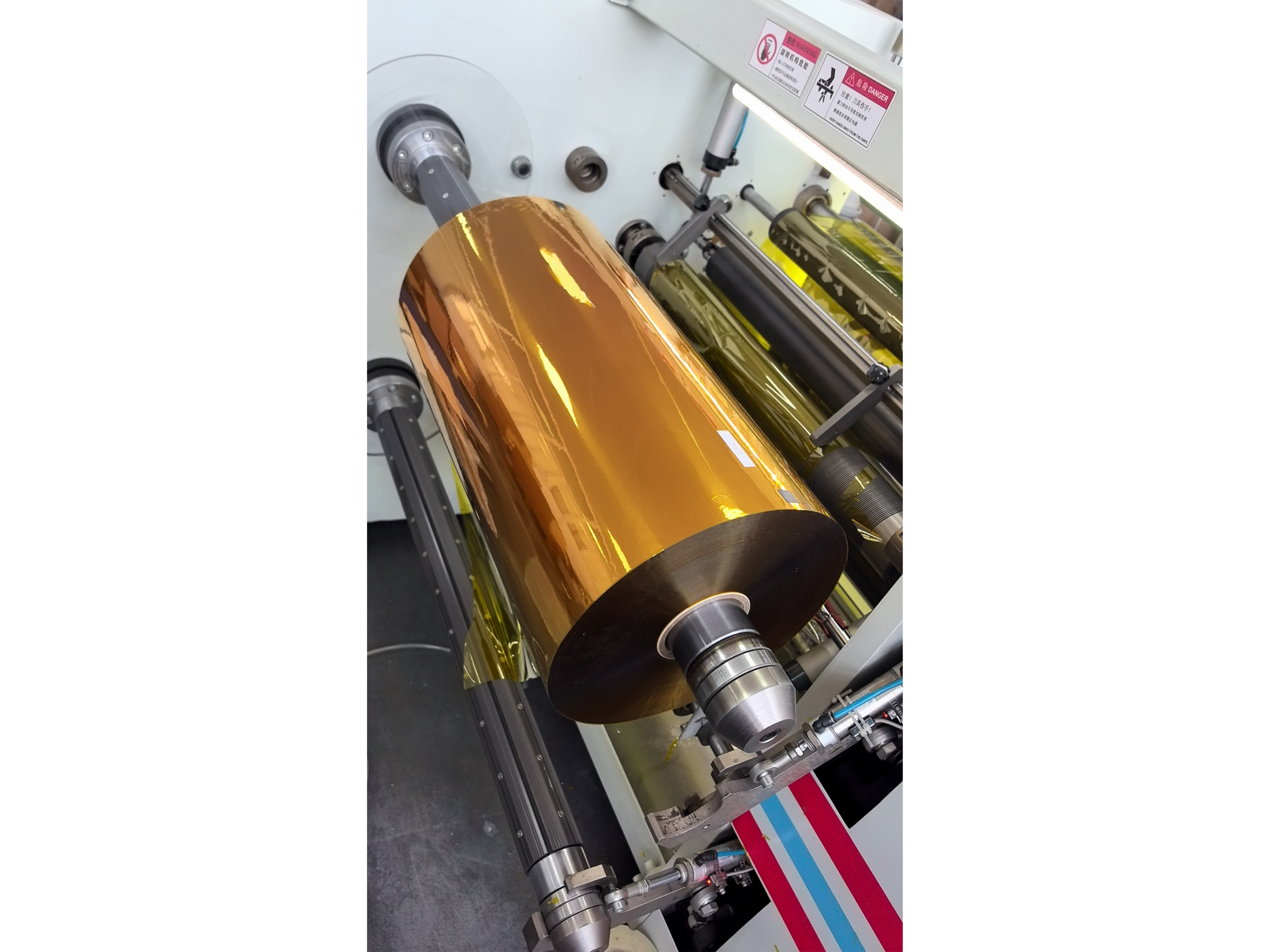
First, clarify the concept: Unidirectional polyimide film=Unidirectional oriented PI film, with molecular chains oriented along the stretching direction. Compared with ordinary bidirectional BOPI and unstretched cast PI, it has differentiated advantages in insulation, voltage resistance, and breakdown characteristics. It is widely used in flexible copper-clad laminates (FCCL), motor insulation, cables, and high-temperature components.
1、 Core electrical insulation indicators (quantified)
1. Breakdown voltage strength (high voltage resistance)
Unidirectional orientation structure with regular molecular arrangement and fewer internal micro defects
Conventional unidirectional PI: breakdown strength 180-280 kV/mm
Under the same thickness, it can withstand higher instantaneous voltage; Thin specifications (12.5 μ m, 25 μ m) still maintain stable breakdown resistance, suitable for micro circuit isolation insulation.
Application scenarios: power device isolation layer, turn to turn insulation of micro transformers.
2. Volume resistivity (preventing leakage current, core insulation parameter)
The volume resistivity at room temperature can reach 10 ¹⁶ to 10 ¹⁷Ω· cm, belonging to the insulation material range.
Advantage:
Under high DC voltage, the leakage current is extremely small, making it less prone to leakage losses; The attenuation amplitude of electrical resistivity in high-temperature environments (200-250 ℃) is much smaller than that of ordinary insulation films such as PET and PC, and the insulation barrier is still maintained at high temperatures.
3. Surface resistivity
> 10 ¹⁵ Ω/sq, standard high insulation properties, does not form surface conductive paths;
It can be made into anti-static grade through formula adjustment, but the substrate body is highly insulated.
4. Low dielectric constant and low dielectric loss
Unidirectional PI: dielectric constant Dk ≈ 3.2-3.6, low dielectric loss Df.
significance:
Reduce signal loss and prevent the accumulation of medium heat under high-frequency working conditions, suitable for insulation isolation of high-speed lines and RF components, while ensuring stable electrical performance.
2、 Insulation stability under temperature environment
Continuous long-term operation at 220-260 ℃, with no cliff like drop in insulation performance; Can withstand high temperatures above 400 ℃ for a short period of time.
Ordinary plastic film will soften at high temperatures, experience a sharp drop in electrical resistivity, and lose insulation; Under high temperature, the unidirectional PI still maintains a complete insulation isolation layer.
Cold and hot cycling resistance: alternating high and low temperatures do not easily produce micropores or cracks, avoiding insulation failure.
3、 Insulation reliability brought by structure
Unidirectional stretching orients polymer chains:
The defect rate of internal pores and pinholes in the film is reduced, reducing the "weak breakdown points" of high voltage;
The tear resistance in the longitudinal stretching direction is greatly improved, and it is less likely to produce small cracks during processing, cutting, winding, and use; Once minor damage occurs, it is an insulation hazard, and good mechanical properties indirectly ensure insulation integrity;
Comparison: Non oriented cast PI is more prone to internal defects and has weaker insulation consistency under high voltage conditions.
Attention to shortcomings: Unidirectional PI has weak transverse strength and is prone to cracking under transverse stress. Stress should be controlled during processing to prevent insulation breakdown caused by thin film micro cracking.
4、 Resistant to environmental conditions, maintaining insulation without failure
Resistant to hydrolysis and low water absorption rate
Water absorption rate<1.5%, not easy to absorb water and conduct electricity in humid environments; In humid and oil immersed environments, the decrease in insulation resistance is small.
Resistant to radiation and chemical solvents
Contact with organic solvents and weak acid bases will not cause swelling or dissolution, and the insulation interface will not be damaged; Suitable for chemical environment and insulation of aerospace components.
5、 Ground application scenarios, visually demonstrating insulation value
FCCL flexible copper-clad laminate substrate: isolates copper foil from support layer, isolates between circuits to prevent short circuits;
Interturn insulation of new energy motors and traction motors: phase to phase isolation, capable of withstanding pulse high voltage;
Insulation layer of high-temperature cables and inner lining film of electromagnetic wires;
Chips, power device carriers, isolation pads;
The internal insulation and heat insulation integrated film of the battery module blocks high-voltage conduction between the electrode pieces.



 WeChat number:

 Home
Home
 Product
 Wechat
 Telephone