What are the processing techniques for unidirectional polyimide films
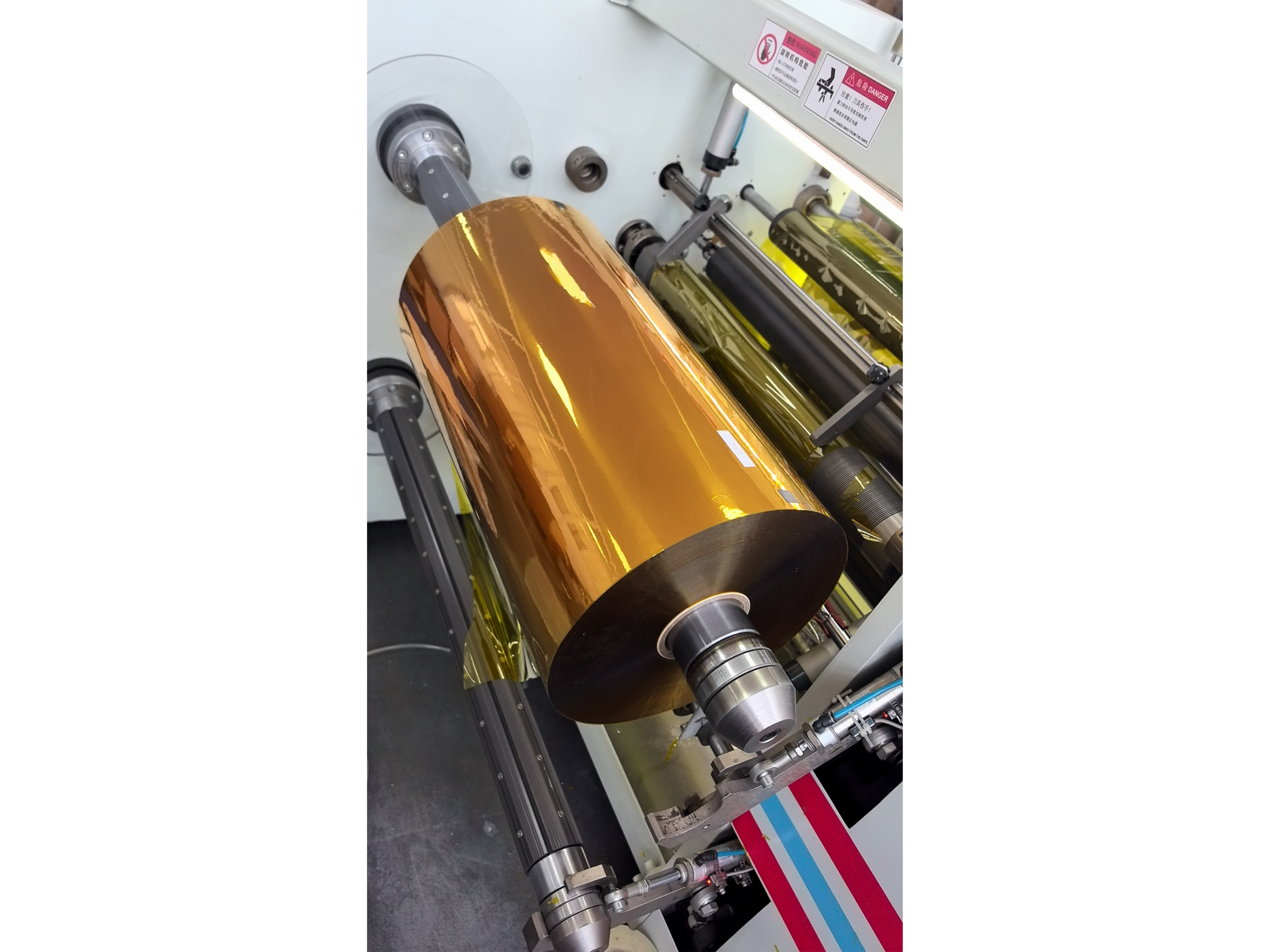
The processing technology of unidirectional polyimide (PI) film revolves around three major steps: preparation of polyimide precursor (polyamide acid, PAA), unidirectional orientation molding, and imidization curing. Combined with directional doping of different conductive/reinforcing components, the unidirectional performance differentiation of the film is achieved. The following is a detailed cl
The processing technology of unidirectional polyimide (PI) film revolves around three major steps: preparation of polyimide precursor (polyamide acid, PAA), unidirectional orientation molding, and imidization curing. Combined with directional doping of different conductive/reinforcing components, the unidirectional performance differentiation of the film is achieved. The following is a detailed classification and process of mainstream processing techniques:
1、 Solution casting uniaxial stretching process (most commonly used)
This is a process for preparing unidirectional PI films, suitable for large-scale production, and can control the unidirectional orientation of the films.
Step 1: Prepare PAA spinning solution
Low temperature polymerization of dianhydride and diamine monomers in strong polar solvents (such as NMP, DMAC) to form a high viscosity polyamic acid solution. Directional conductive components (such as carbon fibers, metal nanowires, graphene sheets) are added as needed, and the conductive components are initially arranged along the stirring direction by high-speed stirring.
Step 2: Cast Film Formation
The PAA solution is uniformly cast onto a stainless steel substrate or polyester film carrier using a slit type die, and the wet film thickness (usually 3-5 times the thickness of the finished product) is controlled by adjusting the casting speed and scraper gap.
Step 3: Unidirectional stretching orientation
After preliminary drying (removing some solvents), the wet film enters a uniaxial stretching machine and is stretched along the length direction (usually at a stretching ratio of 1.5-3 times), so that the PAA molecular chains and doped conductive components are highly oriented and arranged along the stretching direction; No tensile force is applied in the vertical direction, maintaining the disordered state of the molecular chain and forming unidirectional structural differences.
Step 4: Gradient imidization curing
Send the oriented PAA film into the curing furnace and complete the imidization reaction through three-stage gradient heating:
Low temperature drying section (80-120 ℃): Remove residual solvents to avoid the formation of bubbles during solidification;
Intermediate temperature imidization stage (200-250 ℃): PAA molecules undergo dehydration ring closure reaction, gradually transforming into polyimide;
High temperature post curing stage (300-400 ℃): Complete imidization to improve the crystallinity and mechanical properties of the film, while fixing the unidirectional orientation structure to ensure stable directional distribution of conductive components.
Step 5: Post processing
After cooling, peeling off the carrier, trimming, and rewinding, the finished unidirectional PI film is obtained.
2、 Melt extrusion unidirectional orientation process (applicable to thermoplastic PI)
For thermoplastic polyimides that can be partially melt processed (such as polyetherimide, PEI), there is no need to prepare PAA precursors, and unidirectional molding can be achieved directly through melt extrusion, with a shorter process and lower cost.
Mix thermoplastic PI particles with conductive masterbatch (such as conductive carbon black, carbon fiber masterbatch), put them into a twin-screw extruder, and melt plasticize them at 350-400 ℃.
The melt is extruded through a T-shaped die and initially shaped into thick sheets by pressing against a cooling roller. It then enters a longitudinal stretching machine for unidirectional stretching, aligning the PI molecular chains and conductive fillers in the stretching direction.
After heat setting treatment (at a temperature slightly lower than the melting temperature), the orientation structure is fixed, and after cooling, a unidirectional PI film is obtained by slitting.
The disadvantage of this process is that the high temperature resistance of thermoplastic PI is slightly lower than that of thermosetting PI, making it suitable for low to medium performance demand scenarios.
3、 Electrospinning directional collection process (suitable for nanoscale ultra-thin films)
Mainly used for preparing nanofiber type unidirectional PI thin films, with high porosity and good flexibility, suitable for ultra-thin insulation/conductive layers of electronic devices.
Load the PAA solution into an electrospinning device and apply a high voltage electric field (10-30kV) to form a Taylor cone and spray a nanoscale jet.
By rotating the drum collector (with a speed of up to 2000-5000r/min), the jet is stretched and oriented along the direction of drum rotation under centrifugal force, forming a unidirectional arrangement of PAA nanofiber membrane.
Gradient heating imidization of fiber membranes to obtain unidirectional oriented PI nanofiber felt/film, with conductive components synchronously oriented and distributed with the fibers.
4、 In situ polymerization oriented composite process (suitable for high conductivity requirements)
For scenarios that require highly specific conductive pathways, in-situ polymerization is used to tightly bond conductive components with PI molecular chains, enhancing the stability of conductive performance.
Unidirectionally arranged conductive fibers (such as carbon fiber bundles and metal wires) are used as reinforcing skeletons and immersed in PAA solution to allow PAA molecules to penetrate into the fiber gaps and adsorb on the fiber surface.
Stretch and shape the impregnated fiber skeleton to ensure that the fibers are neatly arranged in a single direction, and then perform imidization curing to form an integrated unidirectional composite film between the PI matrix and the conductive fibers.
The thin film prepared by this process has low resistivity along the direction of conductive fibers and excellent insulation in the vertical direction, making it suitable for fields such as aerospace and lithium batteries.



 WeChat number:
 Home
Home
 Product
 Wechat
 Telephone