What are the processing techniques for F46 polyimide film
The core processing technology of F46 polyimide film is to first prepare fluorinated PI substrate, and then adapt it to the application scenario through secondary processing. It mainly includes substrate synthesis process and subsequent molding processing process, as follows:
The core processing technology of F46 polyimide film is to first prepare fluorinated PI substrate, and then adapt it to the application scenario through secondary processing. It mainly includes substrate synthesis process and subsequent molding processing process, as follows:
1、 Substrate synthesis process (core preparation step)
Fluorinated monomer copolymerization process: Based on aromatic diamines and dianhydride, fluorinated monomers corresponding to F46 (such as hexafluoropropylene derived monomers) are added and copolymerized in strongly polar solvents (such as DMF, DMAc) to form fluorinated polyamide acid (PAA) solution. This process requires precise control of monomer ratio, reaction temperature (20-50 ℃), and time to ensure uniform distribution of fluorinated groups and balance the chemical resistance and high temperature resistance of the film.
Film casting process: Fluorinated PAA solution is uniformly coated on stainless steel base or polyester support film through a high-precision casting machine, and the coating thickness is controlled (the wet film thickness is usually 3-5 times that of the final dry film) to form a continuous thin film substrate. The casting process needs to maintain a clean environment, stable humidity, and avoid bubbles and uneven thickness.
Imidation process: It is carried out in two steps. First, low-temperature drying is carried out at 100-200 ℃ to remove the solvent in the film; Then, high-temperature imidization is carried out at 250-350 ℃ to cyclize and dehydrate PAA molecules to form polyimide structures, while curing fluorine-containing groups. This step requires controlling the heating rate to avoid film shrinkage and cracking.
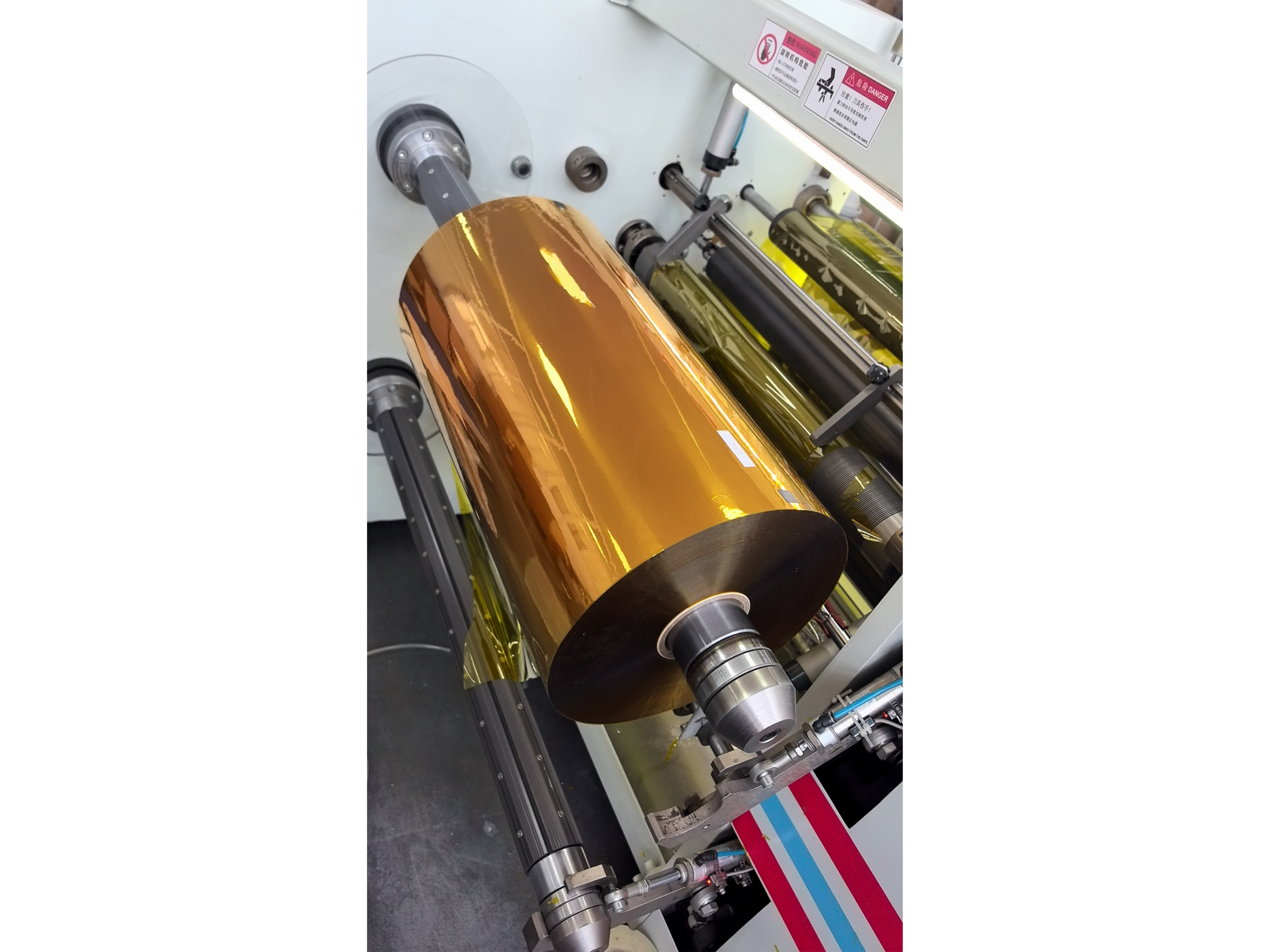
Post processing technology: The imidized film is cooled, peeled off, pulled and stretched (biaxial stretching can improve mechanical strength), cut, and wound to obtain the finished substrate. In some scenarios, surface plasma treatment or silicon coating will be added to enhance the adhesion or demolding properties of the film.
2、 Subsequent molding and processing technology (suitable for specific applications)
Cutting and punching process: Using CNC cutting machines or punching machines, the film is cut into specific sized sheets or punched into shaped parts (such as insulation gaskets and pole ear tips) according to application requirements. Special cutting tools should be used during processing to avoid fuzzing and tearing of the film edges.
Hot pressing process: Place the film in a mold and perform hot pressing at 150-250 ℃ under a certain pressure to conform to the shape of the mold and form a three-dimensional structure (such as shaped insulation cover, sealing gasket). This process requires temperature and pressure control to prevent thermal degradation or deformation of the film.
Adhesive and composite process: High temperature resistant adhesives (such as epoxy and silicone) are used to composite F46 polyimide film with metal foil and other polymer films (such as PTFE) to form composite substrates (such as flexible circuit board cover film and composite insulation material). It can also be bonded by hot pressing and utilizing the thermal adhesion of the film itself.
Coating and modification process: Apply functional coatings on the surface of thin films, such as thermal conductive coatings (to improve heat dissipation), anti-static coatings (to reduce surface resistance), and wear-resistant coatings (to enhance service life). The coating methods include scraper coating, spray coating, and roller coating, and the uniformity of coating thickness needs to be controlled.
Turning and Grinding Process: For thick specification films (thickness>0.5mm), precision turning machines or grinding equipment are used to process them into thin sheets or high-precision components of specific thickness (such as high-temperature sealing rings and wear-resistant gaskets). Cooling and temperature reduction are required during processing to avoid a decrease in film performance caused by high temperatures.
3、 Special processing technology (high-end application scenarios)
Laser cutting technology: used for high-precision and complex shaped thin film processing (such as insulation parts for microelectronic products), with a laser cutting accuracy of ± 0.01mm, a smooth and burr free cut, and no mechanical stress damage, suitable for precision electronics and aerospace fields.
Vacuum coating process: Metal layers (such as aluminum and copper) are evaporated on the surface of the film to produce metalized F46 polyimide film, which is used in electromagnetic shielding, flexible circuits and other scenarios. The coating process requires maintaining a high vacuum environment to control the adhesion and uniformity of the film layer.



 WeChat number:
 Home
Home
 Product
 Wechat
 Telephone